Dendroboor model 2026 developed with financial support from E-RIHS
Unique selling points
Smaller diameter, less invasive.
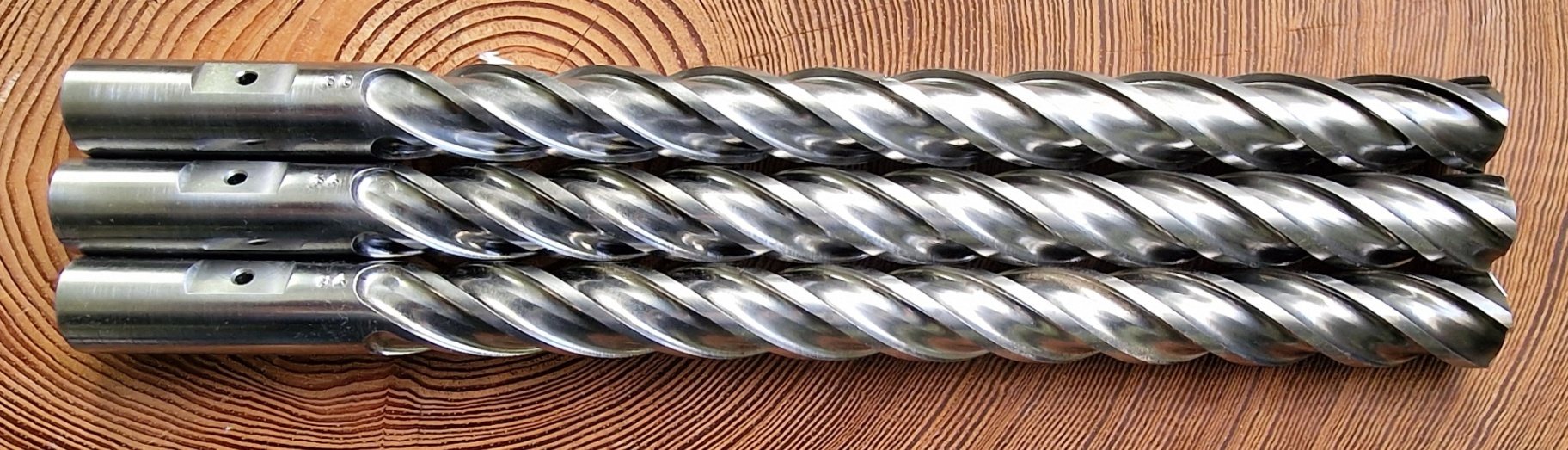
Lighter, tougher, more wear resistant PM HSS steel.
Increased tool life.
Less friction, drill more cores per charge.
Better dust and wood chip handling.
Toolset
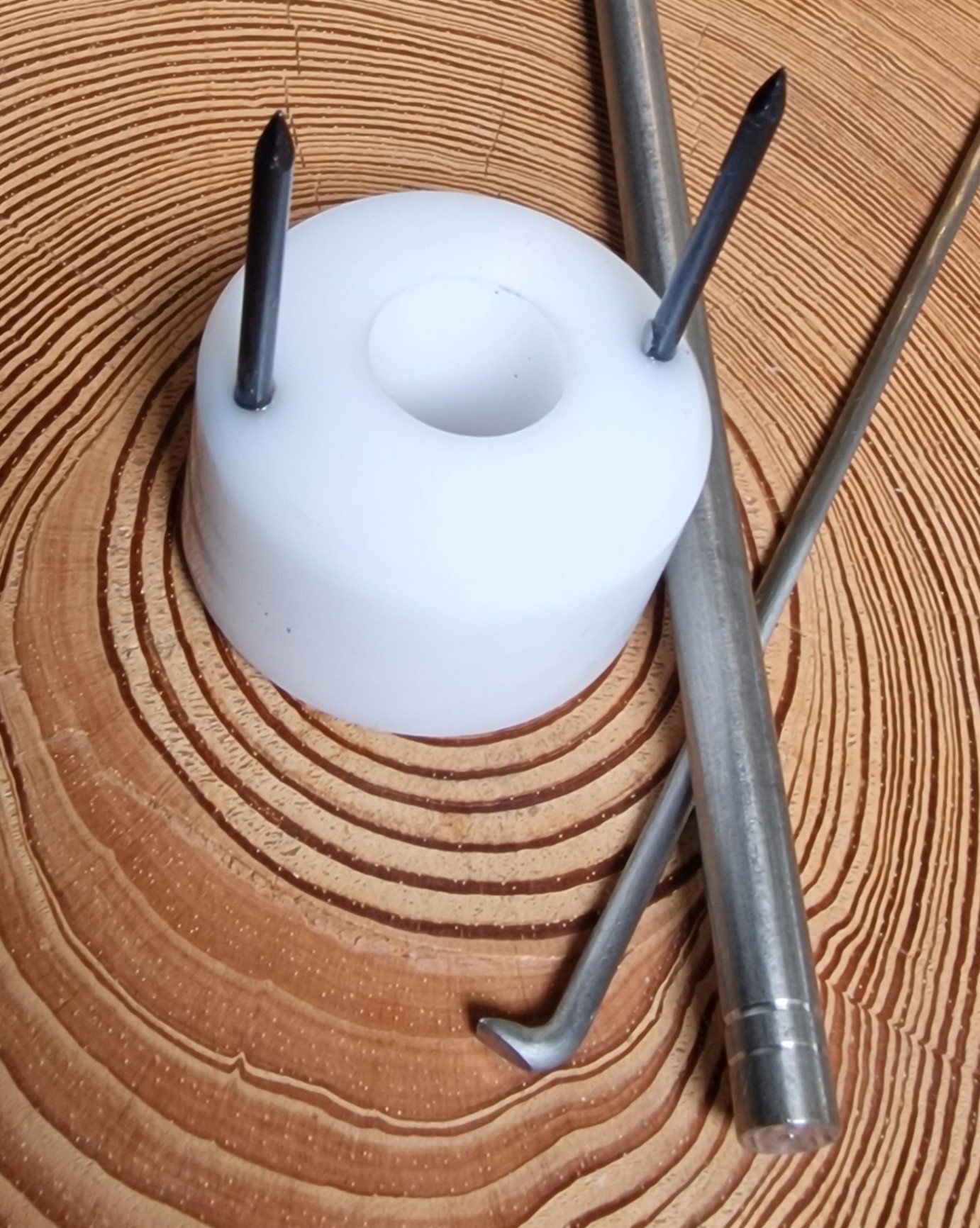
You can also order toolsets containing:
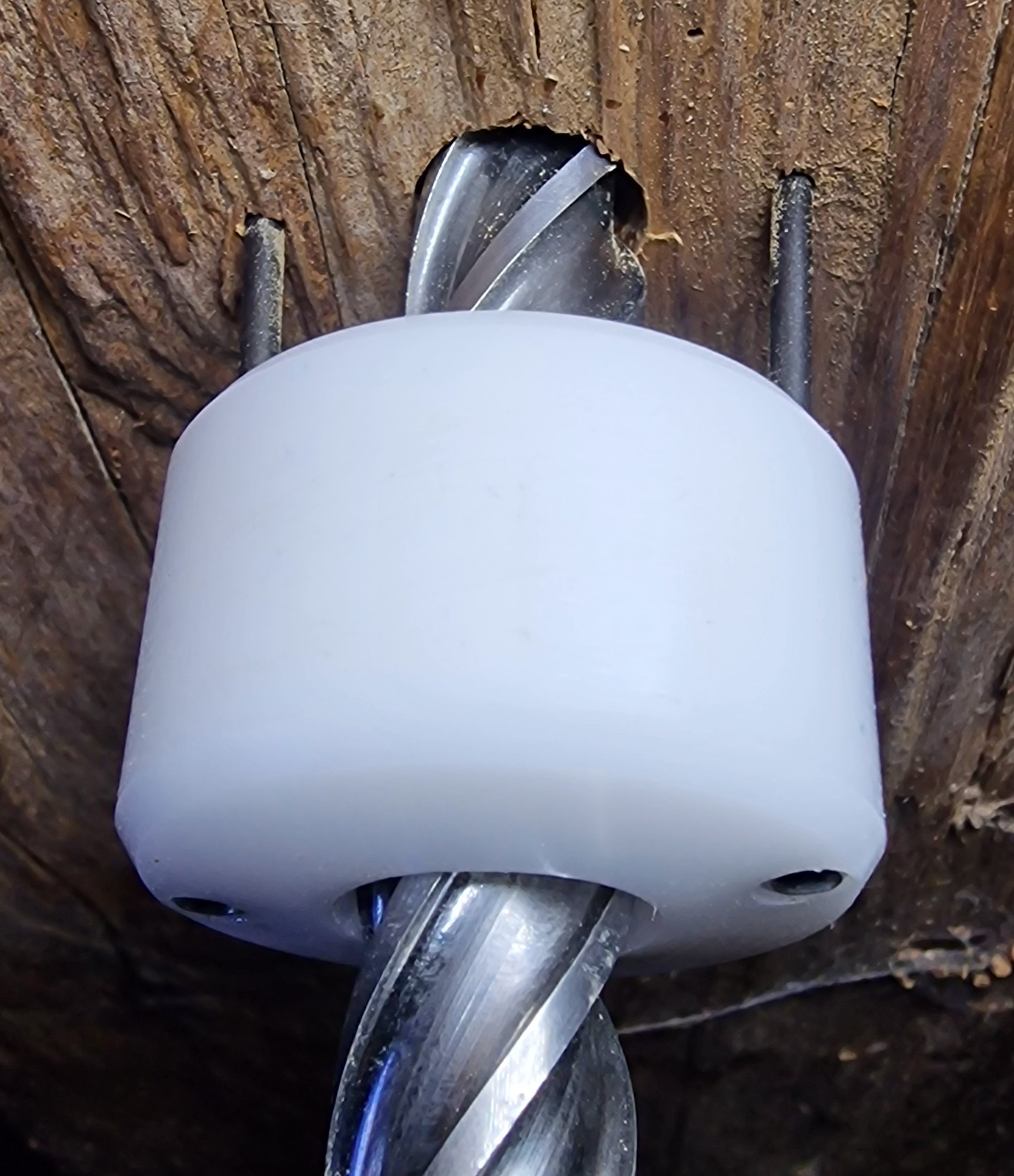
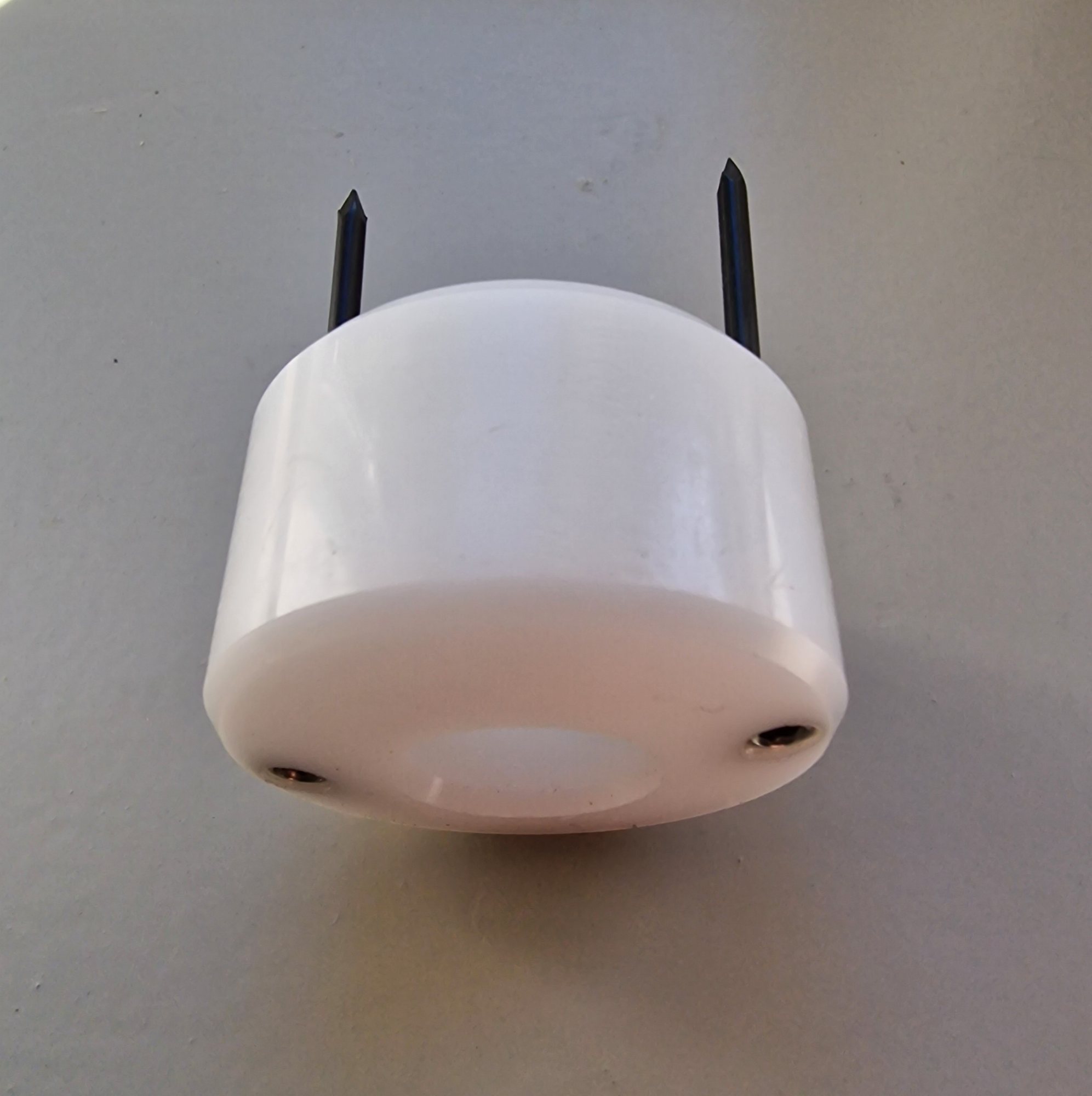
Starter made from very durable polyacetal (POM-C).
Round stainless steel bar for the extraction of samples from the core drill.
Cutter-hook for the extraction of samples.
It is highly recommended to purchase the toolset together with the drill, as the starter is specifically designed for this drill and will significantly improve your drilling results. Additionally, the stainless steel bar is narrower than previous models.
Prices excl. VAT. Registered shipping within the EU: € 20 per order (packing and transport).
Sharpening
It is of great importance that the outer growth rings, the sapwood, are not lost during drilling. The way the drills are sharpened provides a high probability that these will not break off or be lost during drilling.
The drills are sharpened in a special way, which cannot be done with standard grinding machines. The sharpening process contributes significantly to the drilling results. It largely determines how easily the drilling goes, but it also has a major influence on the tool life, meaning the number of cores that can be drilled before resharpening is required. Additionally, it strongly affects the temperature development during drilling. Excessive temperatures at the cutting edges have a negative impact on the hardening. We therefore recommend having your drill sharpened by us.
€ 35
Professional resharpening of your Dendroboor corer, in the special way described here.
Bring the drill to the drill guide at the correct angle.
04
Lean lightly into the drill guide with the tip of the core drill.
05
Do not yet touch the wood with the teeth of the core drill.
06
Start the drill in the highest position without touching the wood.
07
Continue to lean into the guide and carefully advance the drill until it touches the wood.
08
Do not drill more than 2-3 cm and pull the drill back a centimeter to unload the dust.
09
Drill another 3-5 cm into the wood and retrieve the drill to unload.
10
Never pull back so far for the front of the drill to reach the sapwood (oak).
11
Remove the running drill from the wood in one smooth and straight motion.
Some extra thoughts
Keep leaning lightly into the guide throughout the process, including when removing.
Allow the drill to run through the whole process uninterrupted.
Never remove the drill completely from the wood during the process.
While it is technically possible to drill a core sample in a single continuous pass, doing so is highly discouraged because the frictional heat will cause the core drill bit to overheat and lose some of its hardness through a process called tempering or thermal softening.
Use safety glasses, gloves and ear protection.
Technical notes
Core diameter
Core samples must have a minimum width to be usable for dendrochronological analysis. In consultation with various dendrochronologists, this minimum has been set at 10 millimeters. The core drill has a diameter of 17mm, with a corresponding drill hole diameter of 17mm. This is the minimum achievable size for 10mm core samples without compromising drill strength.
Drilling in a straight line
With a length of 245 mm and a width of only 17 mm, the drill bit is at the lower limit of the desired rigidity. The powder metallurgical high-speed steel (PM-HSS) used is exceptionally tough and can endure a lot, but there is a limit. Therefore, it is of crucial importance to drill in a straight line and avoid applying transverse loads (side loads) during drilling.
A transverse load creates significant friction, and friction causes heat. A highly detrimental effect of this heat is that the drill tip, the only part of the tool that is hardened, will lose its hardness, resulting in far fewer core samples being drilled per sharpening.
Extracting the core
Slide the extractor hook backwards between the core and the borehole. Twist the hook to loosen the core. It is usually best to turn the sharp edge toward the core first to cut it loose. This is generally enough to release the core. In softwood, this sharp edge can sometimes cut straight through the wood without releasing the core. If that happens, turn the hook toward the core and snap it loose. Sometimes, if it really won’t budge, there might be a small knot right at the desired break point. In that case, it helps to pull the extractor hook back one or two centimeters and break the core off just above the knot.
The core can move violently when it breaks free. Therefore, press down on the core with a finger while breaking it out. This prevents the head of the core from snapping off.
Wooden grooves
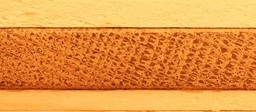
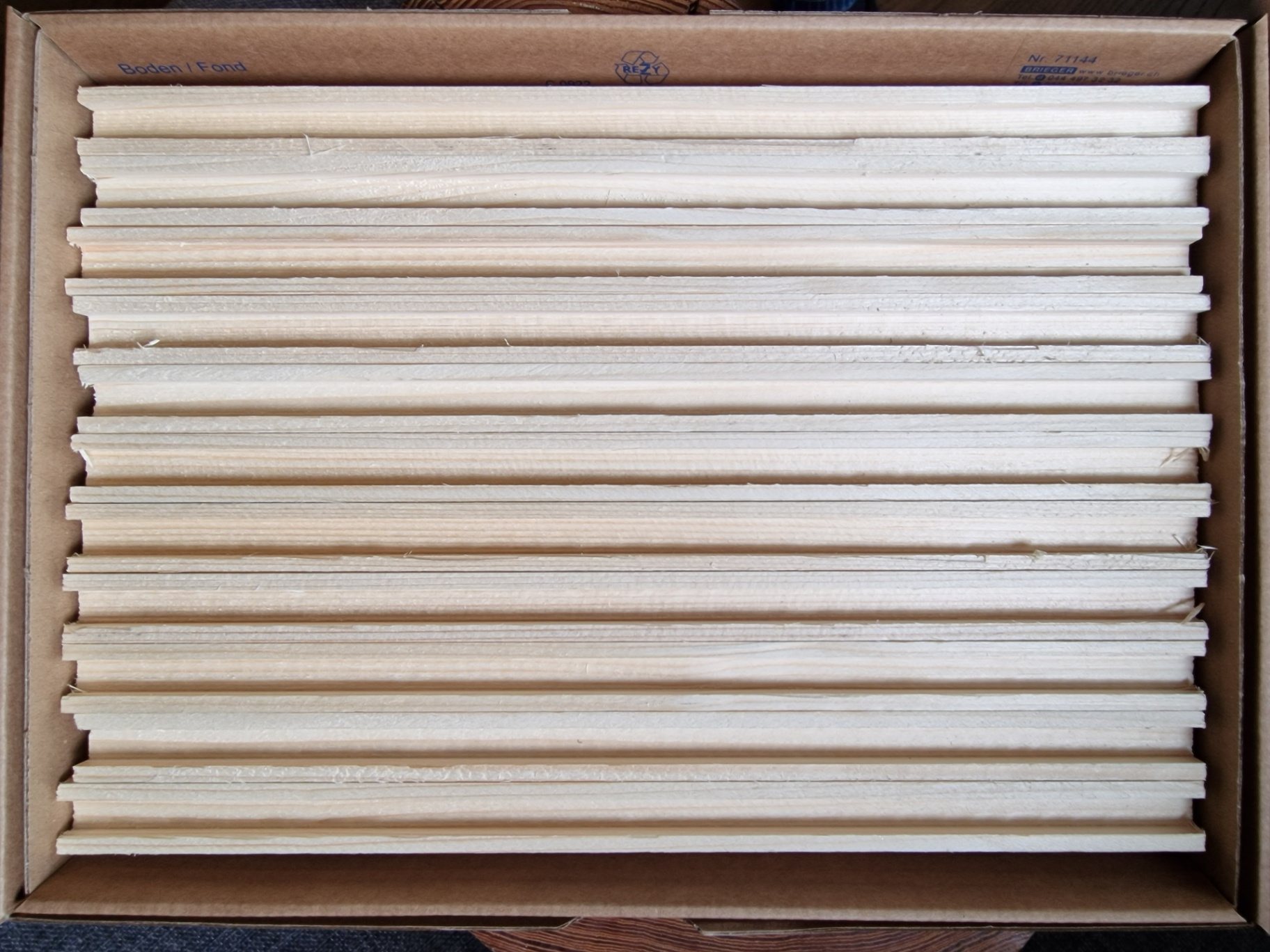
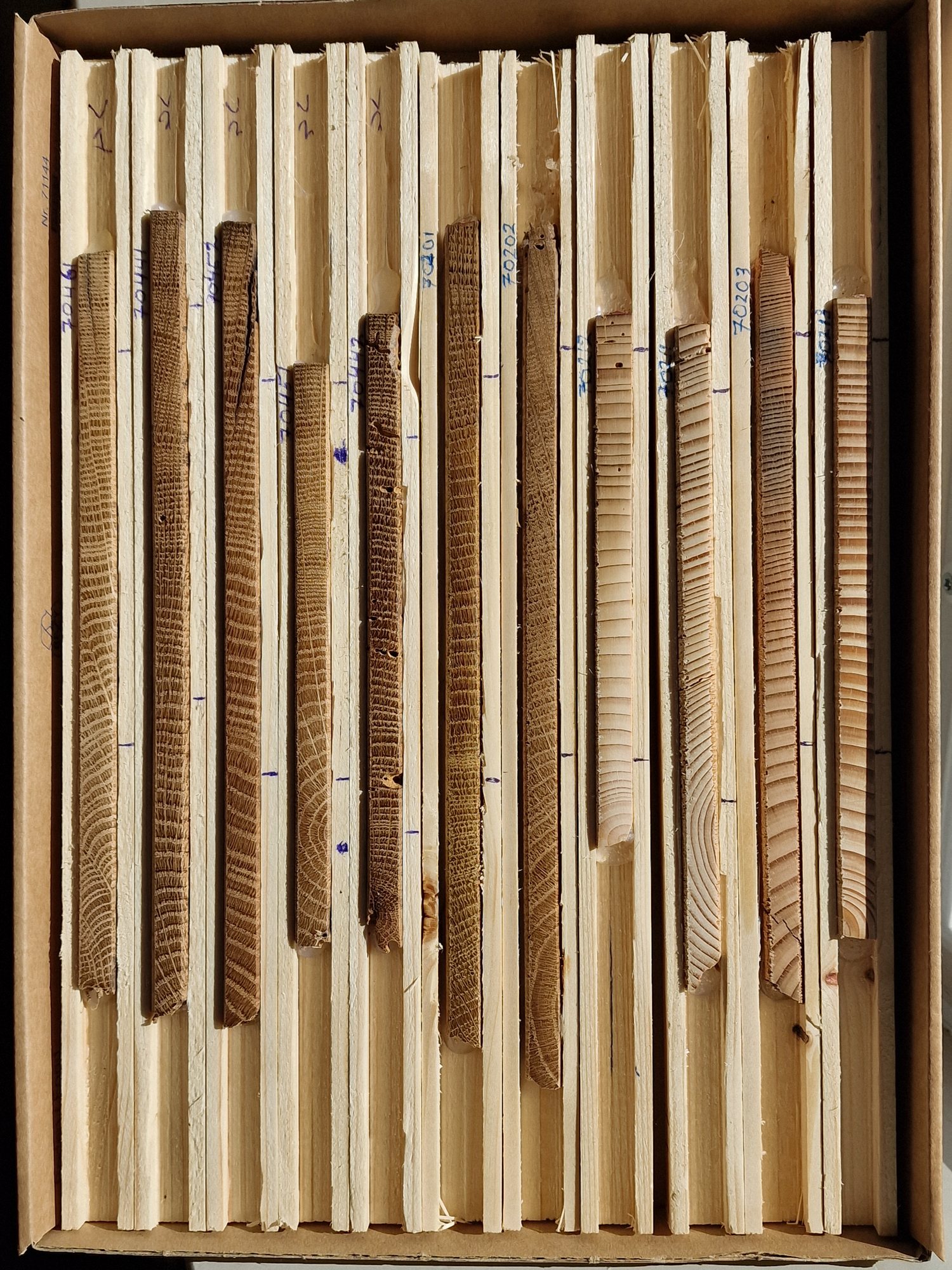
The wooden grooves are custom-made to fit the core samples perfectly. During fieldwork, number each sample, but also number the tray in which it is stored. Next, write an indication of the exact drilling location on the side of the tray, along with visual details, such as whether it concerns a waney edge, or if the edge of the beam is chamfered, and so on.
Core samples should not be broken, unless there were drying cracks in the wood. Other breaks are always the result of a faulty drilling process.
Any sapwood must not be lost during drilling. This can happen if the drill only starts rotating after it has already been pressed against the wood, or if the drill is pulled back too far when clearing the chips during drilling.
A plug (or ‘core tail’) at the beginning of the core sample is the result of pulling the drill back too far, or even removing it completely from the wood during the drilling process.